



Wild Fermentation and Lactic Acid Sours in the Andean Terroir: An Adventurer's Guide to the Sacred Valley of Peru for Wild Food Enthusiasts and Pickapeppa lovers
The Andean Acid Terroir
The unique terroir that you will find in the Sacred Valley in Peru, located between Cusco and Machu Picchu, is perfect for sour making and can be compared to such regions as Pajottenland in Belgium. At high elevations above 2,800 m / 9,186 ft, the microflora – influenced by diurnal temperature swings (0°C/32°F - 20°C/68°F) – promotes complex fermentations. Native wild yeasts and bacteria have a field day too, and the low atmospheric pressure speed up ethanol production while UV radiation selects keener strains. With ingredients like Andean grains and fruits bringing notes of acidity and minerality, reminiscent of pre-Columbian classics such as chicha de jora, the staple fermented drink which is older than the Incas for centuries. This affinity brings modern sours a deep root ancestral undercurrent where lactic acid bacteria reign supreme producing a clean, bright acidity rather than heavy acetic notes.
Regional Microbiological Profile
Recorded strains are among them high-altitude-adapted strains of Brettanomyces bruxellensis, bringing more tropical phenolics – pineapple rather than barnyard – due to oxidative stress induced by UV. Lactobacillus plantarum, recovered from purple corn fermentations, is dominant and indeed imparts a titratable acidity (TA) of 5-7 g/L in traditional sours. Low solubility of CO2 at low pressure gives a mild/nice carbonation in spontaneous fermentations. Studies from the National University of San Antonio Abad del Cusco are studying these phenomena as the Andean microflora produces sours with high malic acid (from native fruits) rather than lacto-dominant profiles found in European lambics. The result is beers that are frequently pH 3.2-3.4, which is balanced by mineral notes from the Maras salt flats.
Technical Stops - Analysis by Brewery
Cervecería del Valle Sagrado : Pachar
Situated at Km 64 on Ollantaytambo-Urubamba Highway in der Sacréd Vally at den Höhe von 2.850 m (9,350 Ft.), Braumeister Gustavo Vargas ist der Kopf hinter der Brauerei, er studierte belgische Sauertechniken bei Cantillon und hat zehn Jahre Fokus auf gemischter Fermentation. The fermentation philosophy employs a turbid mash to promote elevated dextrins that favor slow acidification, utilizing open inoculation with native valley microflora in nocturnal coolships. Aging takes place in a solera system of 225L French oak barrels (second-use, ex-Malbec), with an average maturation of 12 to 24 months in a cellar held at 12°C ±1°C (54°F ±2°F)—a process that has been continuously blended and refined since the solera was established in 2015.
A Look at Their Flagship Sours
Trotamundos – A Fruited Sour Ale
The grain bill is straightforward—pale malt and raw Andean wheat, pretty much split down the middle. They’re using a local isolate of Lactobacillus brevis, harvested from the valley, along with Brettanomyces claussenii. The specs tell the tale: a narrow pH range of 3.3 to 3.5, bitterness dialed way back to just 5 IBUs, and a sessionable 5% ABV. It was aged 12 months in used oak barrels which brought it all together without imparting any wood flavors. In the glass, it’s a hazy golden pour with a thin white head.
Bright passionfruit, really intense, the first sniff is all—followed by a clean, sharp lactic prickle and just a tiny touch of something funky in the background, like old leather or a damp cellar. That first taste: a crisp, lactic punch right up front. It softens quickly to gentle flavours of peach and apricot, then ends dry and clean with a mineral aftertaste that lingers. The body remains light while the carbonation is moderate. It’s the kind of brew that makes you have another sip to prove you did it right.
Skip the chips—pair this with the local trout ceviche. That sharp acidity slices straight through the oily fish and makes the lime and onion pop.
Blueberry Blitz – A Berliner Weisse
It’s based on a proper two-election: 50% pilsner malt, 50% unmalted wheat. They sour it right in the kettle with Lactobacillus plantarum, ferment it clean, then let it sit on a pile of local blueberries for six months. The total is truly tart–pH hovers between 3.2 and 3.4–with practically no bitterness (5 IBUs) and a thin 5% ABV. It pours a hazy purple, much like a thin jam, with an energetic, tenacious fizz that scurries to the bottom.
The aroma is familiar: fresh, crushed blueberries with a clean, yogurt-like acidity to the side. On the palate it is a true shot of blueberry acidity — not sugar sweet, but just sharp fruit — with a mild, earthy undertone that anchors it. It is crisp, quick and clean on the finish. It’s got a prickly, high carbonation and drinks super light.
Get yourself a bowl of herby quinoa salad. The beer’s berry-forward tartness contrasts beautifully with the grassy, nutty notes.
Sauco Sour Smash – Barrel-Aged Sour
All pale malt. Nothing else in the grist—just a straight SMaSH build. What happens next is where it gets interesting: a mixed culture of Pediococcus damnosus and a few Brettanomyces strains takes over. The numbers come out tight—pH 3.4–3.6, a faint 8 IBUs, and a light 4.5% ABV—after eighteen months resting in ex-bourbon American oak.
It’s a murky amber and really no head to speak of. The aroma is all dark berries, vanilla from the oak and a funky leather note that hangs out in the background. Take a sip and you get a green-apple tartness right up front, then it opens into richer berry notes before finishing dry and just a little bit grippy from the wood. It has a medium body on the tongue and the carbonation is soft and quiet.
Grab a wedge of aged Andean cheese. The beer’s tannic finish slices right through the fat and cream.
Want to see how it’s made?
They run a microbiology tour every Friday at 3 p.m.—you’ll get a look at the inoculation room and their blending setup.
To book, WhatsApp us at +51 984 123 456, and be sure to do it a minimum of 72 hours in advance.
Victoria Brewery – Mollepata
The head brewmaster of Victoria Brewery is Head Brewmaster Elena Rojas and is situated in Mollepata. When travelling from Calle Rumi Rumi and joining the Camino de Soray and Mollepata at the bottom of Calle Rumi Rumi and also at the intersection of the Camino De Soray, the brewery would be approximately 2,950 (9,678) feet above the sea level, with a latitude of longitude of 13.320'south and 72.540'West. A complete autodidact in the field of spontaneous fermentation, Elena has been specializing for the past seven years in Andean-inspired sours brewed off of chicha, taking profound inspiration from Andean brewing. Her fermentation doctrine is one of absolute spontaneity utilizing active chicha as live starter culture and eschewing a turbid mash as the wort itself is exposed to the local environment on coolships to gather the native microbes of putumayo. For maturation, she uses neutral 225-liter casks previously used for pisco, in which the beer matures for from 18 up to 36 month in a cellar with stable 13°C (55°F).
Featured Sours: A Technical Tasting
Frutillada - Sour Experimental
This trial run brew is a jora-based (germinated corn) with 70% making up the brew along with 30% local wheat. Fermentation is wild natural, at the same time air borne organisms are warm, chicha and yeast. The product is kenya sharply tart beer with pH 3.2 – 3.4, bitterness Less than 5 IBU and 5.5% volume of alcohol. It is second fermented with strawberries for a whole 24 months in the making. It has a cloudy pink colour with fine bubbles. The aroma is a bright mixture of strawberry jam and herbal, dank funk. On the palate, there’s a bright, clean, lactic sharpness, then a sweet and tart strawberry acidity, and it ends with a very distinct, earthy flavour. It’s perked up by a burst in the carbonation and it’s medium bodied. It also goes excellently with rocoto relleno (stuffed spicy peppers): its acidity is just the thing to cut through the heat of the plate.
Chicha Sour Base – In the style of Lambic
A local grain sour with none of the pretension! This Sour is made with 100% jora. Its microbiota is a spontaneous fermentation initiated by a tidal wave of microbes retrieved from the environment, which includes Lactobacillus plantarum and multiple strains of Brettanomyces. It reaches an exceptionally low pH of 3.1-3.3, is free of bitterness (0 IBU), and is 4.8% ABV gentle. The beer has been aged for a full 36 months in used pisco casks. It is a petite pour hazy gold with little foam. The nose has flavors of corn husk and a mild acetic sharpness. The taste is dominated by a powerful lactic sourness with rich mineral undertones. This has a very silky smooth feel in your mouth. There is little carbonation. To enjoy better together, the smoother in one's mouth will blend well with the anticuchos grilling (beef hearts skewered) charred meat tastes the same as the sourness and earthiness from the Anticuchos to the Anticuchos beer will complement.
Herbal Experimental – Fruited Sour
This is part of the single batch – jora and wheat await your delectation here. The fermentation process is led by a complex inoculum of local herbs, infusing every batch with its own signature. It has a pH of 3.3-3.5, a tiny 3 IBUs, with 6.0% ABV. There were 150 bottles bottled after 18 months of maturing. Its appearance is a herb-tinged amber color. Floral and lactic on the nose. It is tartly malic (think green apple), then opens into a layered herbal tapestry. The body and carbonation levels are both medium. It pairs wonderfully with lomo saltado (stir-fried beef), as the herbal notes lift the savory, wok seared flavors of the dish.
VISIT SCHEDULE: Private blending sessions take place on Saturdays. Contact us through whatsapp at +51 984 789 012, minimum notice of 72 hours required.
Alma Andina – Urubamba
Alma Andina is located in a humble nondescript room on Calle Comercio 123 in Urubamba — look for the unmarked wooden door framed by barrel staves. The venue is located approximately 2,870 meters above sea level (9,400 feet) exactly at 13.306° S, 72.116° W, if you are punchin' that in. Running the show is Marco López. He spent years immersed in Colorado's wild ale scene before heading south, and for the past six years he's been dialing in fruited sours here in the valley. His approach is pretty interesting: he gets a clean, predictable sour base going in the kettle first, then throws the gates open for a wild referment on local fruits. All that beer ends up in towering 500-liter oak foeders that used to hold wine. Things sit there anywhere from one to two years in a cellar that stays right around 14°C (57°F), and he’s been running a solera program since 2020 to keep things consistent and complex.
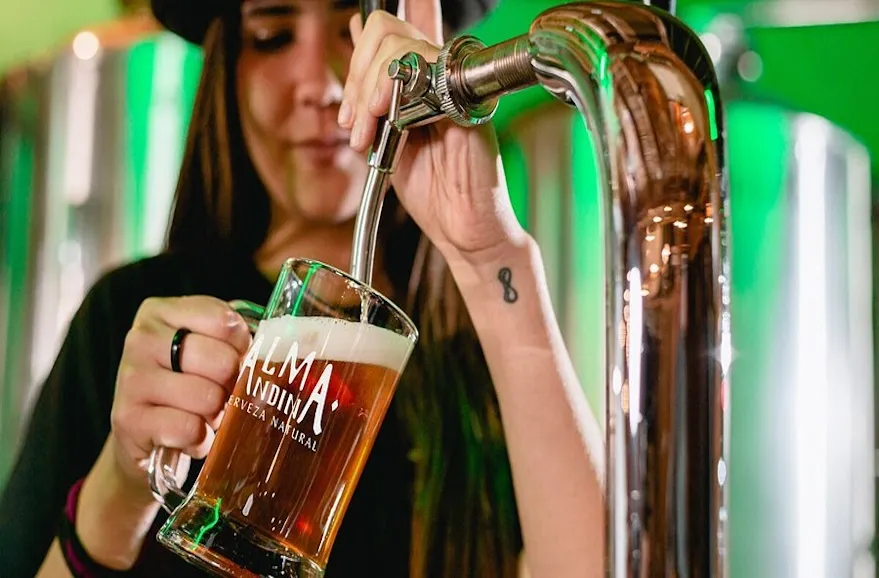
Andean Wild Chicha – Corn-Based Sour
This one’s a real taste of place. The mash is mostly purple corn (60%) with barley making up the rest. A mix of Lactobacillus and Brettanomyces bruxellensis handles fermentation, and after 18 months in the foeder it lands at a pH of 3.4–3.6, a barely-there 4 IBUs, and 5.2% ABV. It pours a murky purple—almost like a thin chicha morada. Smell it and you get that distinctive, earthy corn aroma wrapped up with a funky berry note from the Brett. The taste is all bright lactic tang up front, with a deep, almost stony mineral finish that has to come from that purple corn. It's got a medium weight on the tongue. Grab a plate of papa a la huancaína; the beer’s sharpness slices right through that rich, spicy cheese sauce.
Aguaymanto Ale – Fruited Sour
Pale and wheat malts form the foundation here. It gets soured with Pediococcus and fermented with wild yeast before a long rest on aguaymanto—Peru’s tart golden berry—for a full year. The specs come in at an ABV of 5.5%, IBU of 5, and a pH of 3.3. The character is straight-up citrusy and sharp, finishing bone-dry. This beer is the perfect beer to harmonize with a plate of fresh seafood .
Barrel Blend - Aged Sour
This is their blender’s canvas—a mix of grains fermented with their house culture, a real grab-bag of microbes. It sees a solid two years in the solera, coming out at pH 3.5, 6 IBU, and a robust 6.5% ABV. For me the flavors is lost in the complexity of the oak, oak over oak, too much oak. You’ll need something a little robust to go with that — like grilled steak or slow-roasted lamb — to stand up to its flavors.
Want to see it for yourself? They doing tours on Thursdays. Just shoot a message to +51 984 456 789 to set it up.
Willkamayu – Urubamba
Look for a dusty hummingbird mural on the wall of a short building on Avenida Ferrocarril. That’s the spot. At some 2,900 meters above sea level, the air is thin enough to make you feel as if you’ve already had a beer. Pablo Torres owns the place. Eight years ago he was homebrewing in a garage down the street; now he’s got a wall full of ex-wine barrels quietly doing their thing in the back. He doesn’t overcomplicate it—a little Lacto here, some Brett there, whatever fruit looked good at the market that week. Everything sits in barrel for at least a year, sometimes closer to three, in a room that always feels like a spring morning.
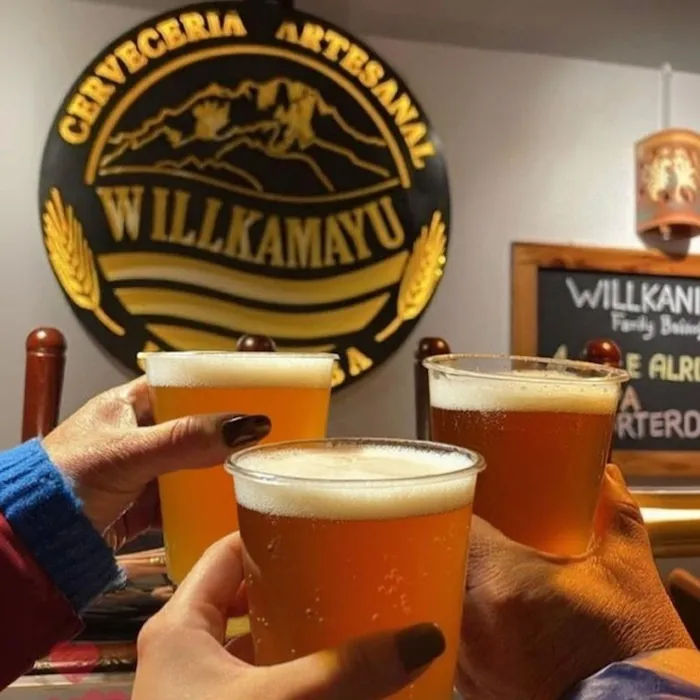
Their Fruited Sour
He keeps the grain bill simple—mostly wheat—and lets the microbes and fruit do the talking. After a year, it drinks sharp (pH 3.3) and light, with just enough alcohol (6.2%) to let you know it’s there. The fruit comes through clear and bright, no syrupiness.
Wild Blend
This one’s for the purists. Spontaneously fermented, it’s all earthy funk and bright acid, finishing dry at 5.8%.
Experimental
Always something odd in the works. Last time I was there, it was a sour aged on chonta palm fruit. Could be anything.
They open the doors on Fridays. Send a message to +51 984 321 654 to inform him that you are on your way.
How Things Actually Work Around Here
Letting the Valley In
Up in Mollepata especially, some brewers skip the cultured yeast altogether. They cool the wort in wide, shallow pans overnight, uncovered. The idea is that whatever’s floating in the mountain air—and there’s plenty—will find its way in. The wind seems to carry a particular mix up here that gives these spontaneous beers a distinct, slightly herbal edge.
Different Paths to Tart
There’s no one right way:
Some do a quick sour in the kettle for a clean, sharp bite—done in a couple days.
Others go fully spontaneous, letting nature take months or years to build something complex.
Most end up somewhere in the middle: a controlled sour start, then into barrels with a mix of wild yeast to slowly add character.
By the Numbers
Just so you know, the pH of sour beers brewed around here tends to fall somewhere between 3.2 and 3.6. They’re tart, but not brutal. In order to keep the flavors steady from batch to batch, many perform a solera—they’ll take some aged beer out of a barrel to bottle, then they fill that barrel back up with new beer, so there’s always a mix of old and young. They add just enough sugar to get a lively, prickly fizz when they bottle.
What Makes It Taste Like Here
Aguaymanto: Those tiny golden berries that are sold in paper cones on the street. Add them to a fermenting beer and they add a tangy, almost tropical kick.
Tumbo: Looks like something from otherworld, tastes like sharp green apple and passionfruit. Brewers love it for the bright, crisp acidity it lends.
Chicha de Jora: This ancestral corn beer is sour even before it begins. Some brew use a splash of active chicha to start their own fermentations—it’s like a sourdough starter, but for beer.
Maras Salt: From those thousand-year-old terraced ponds. It doesn’t turn the beer sour, but a drop will make the acidity present appear brighter, keener on the tongue.
If You’re Planning a Sour Beer Day
Work your way from east to west:Start in Urubamba. The beers here tend to be fruit-forward and approachable—a good way in.Head to Mollepata. Things get more interesting here, with brewers playing with spontaneous fermentation and local ingredients like chicha.
Finish in Pachar. This is where you’ll find the complex, barrel-aged blends that have been sitting for years. Save these for last.A practical tip: Drink from lighter to heavier, less sour to more sour. And between stops, have a sip of plain soda water. It cuts through the acid on your palate and lets you actually taste the next beer.
Yucay Brew – Yucay
Plaza Manco II 107, Yucay, Urubamba, Valle Sagrado
Altitude: ca. 2,900 Meter
Not Your Average Stop for a Sour
Yucay Brew treads a different path since its establishment in 2014. While other Sacred Valley brewers are experimenting with wild yeast and barrel-aging, this location keeps it classic. Their muse is pure Andean tradition — think less Belgian lambic, more chicha with a slick modern twist. The mood is community and connection, not lab-coat alchemy.
If you are crafting a sour-focused itinerary, you can pass on this one.Here’s what isn’t on the menu:
There aren't any exclusive sour beers, though.
There are no wild or mixed fermentations (or any that they talk about).
There is no purposeful Brettanomyces, or Lactobacillus.
No sour-focused barrel program
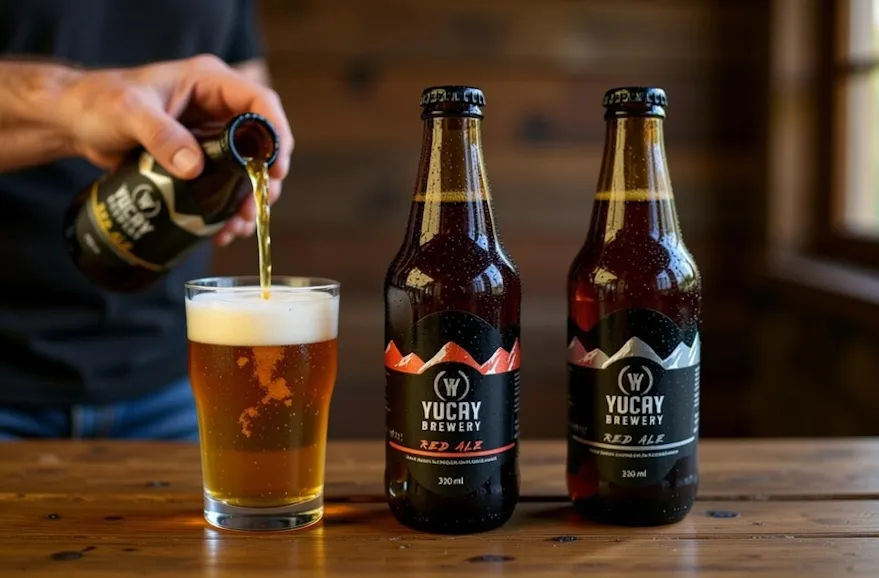
That “Refreshing Acidity” You Might Hear About
Their Witbier — a Belgian-style wheat beer — sometimes gets described as having a “light, refreshing acidity.” Don’t let that fool you. That brightness comes from spices: orange peel and coriander seed, not bacteria. The pH is estimated around 4.0–4.5, which isn’t sour territory — it’s just a crisp, clean finish.
Bottom Line
Yucay Brew is the cozy, dependable pint at the close of the day. It's not where you analyze fermentation profiles, but where you relax.
That said, their roots in chicha culture mean the potential for future sour experiments is there — they’ve got the ingredients and the tradition. For the time being, they're content to do what they do best.
Hours:
Tue–Sat | 1:00 PM – 9:00PM
Sun | 11:00 AM – 8:00PM
Contact: WhatsApp +51 913 165 855 | contacto@yucaybrew.com
Technical FAQ – For Brewers & Collectors
How does the level of sourness in Andean sours compare to that of traditional Belgian lambics?
You’ll see these sours are much brighter and more fruit-forward than their cousins from Belgium. It’s less of the horse-blanket funk and more of the clean, lactic zing — courtesy of the local Lactobacillus strains that flourish up here. Even the Brettanomyces is tame, with notes of tropical pineapple and passionfruit rather than barnyard.
Is spontaneous fermentation or controlled inoculation —the preferred method?
The majority of the breweries do a hybrid model. They’ll almost immediately chill the wort in batches in their indoor coolships at around 10-15°C (nestled between temperature stability, and getting away from the more variable outdoor coolship temperatures) to keep a steady peace of mind when fermenting lambic. A few even jumpstart fermentation with a scoop of actively fermenting chicha — it’s like a sourdough starter, but for beer.
Do these sours turn vinegary?
No. The altitude and cooler temps keep acetic acid in check. If there is any vinegar taste at all, it’s generally in a beer that has been barrel aged for three years or more – and most brewers here consider that to be a defect, rather than a characteristic.
What sort of barrels are they using and how does it affect the beer?
You’ll see a lot of second- and third-fill French oak, along with ex–Argentine Malbec or Cabernet barrels and the occasional ex-pisco cask. The wine barrels bring soft tannins and dark fruit notes; the pisco barrels add a floral, almost minerally lift. New oak is rare—they don’t want to bury the local microbes under too much wood.
Is anyone doing Gueuze-style blends?
A couple of places are. They’ll blend one-, two-, and three-year-old batches, then bottle-condition them. The results have that layered complexity, but with less acetic sharpness and more dried apricot, peach pit, and stony minerality than you’d find in a traditional gueuze.
How do they keep things consistent batch to batch when using wild microbes?
Blending is key. They’ll pull from multiple barrels and vintages to hit a target profile. Some keep a library of local strains to maintain a house character, but they also embrace variation—each batch tells a slightly different story of that year’s harvest and weather.
Do these sours get better with bottle aging?
That depends. For the large barrel-aged blends, an additional 6 to 24 months in the bottle can allow everything to meld. Native fruit sours are best consumed young to retain the fruit vibrancy. The wild, lambic-style beers are at their peak between three and five years, adding depth without dimming their bright edge.
Can you find these beers outside the Sacred Valley?
Not easily. A few are bottled in 750ml format and sold at the brewery taprooms. A couple have made it to specialty bottle shops in Lima’s Miraflores and Barranco districts, but volumes are small, and there’s no export market—yet. If you want to taste them, you pretty much have to come here.