



The Sacred Valley of the Incas is one of those places that feels alive from the very first moment. Not only because of its Andean landscapes, shaped by mountains and rivers, but also because of the history that can still be felt in its villages, paths and agricultural terraces. Walking through this valley means entering a space where time seems to move more slowly.
For centuries, this land witnessed the growth of one of the most important civilizations in the Americas. Today, the Sacred Valley of the Incas remains essential for understanding Andean culture, its deep connection with nature and the way daily life was organized in harmony with the environment.
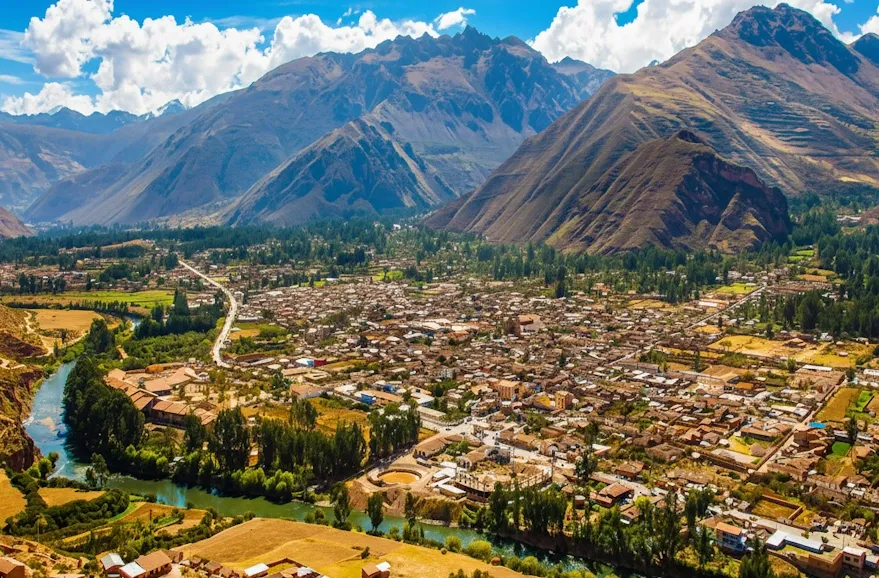
Where is the sacred valley of the incas located
The Sacred Valley of the Incas is located in the Cusco region, in southeastern Peru, following the course of the Vilcanota River, also known as the Urubamba River. It stretches between the towns of Pisac and Ollantaytambo, at a lower altitude than the city of Cusco, which gives it a milder and more pleasant climate throughout most of the year.
This strategic location played a key role in agricultural and political development. Thanks to its fertile lands and constant access to water, the valley became a major food production center and an important route connecting different parts of the Inca Empire.
History of the sacred valley of the incas
The history of the Sacred Valley of the Incas is closely tied to the expansion of the Inca Empire. This territory was considered sacred because of its fertility and the presence of surrounding mountains that, according to Andean beliefs, were protective spirits known as apus.
Before the Incas arrived, the valley was already inhabited by farming communities. However, during Inca rule, impressive urban centers, temples and agricultural terraces were built, many of which still stand today. These structures reflect the advanced knowledge the Incas had in engineering, astronomy and agriculture.
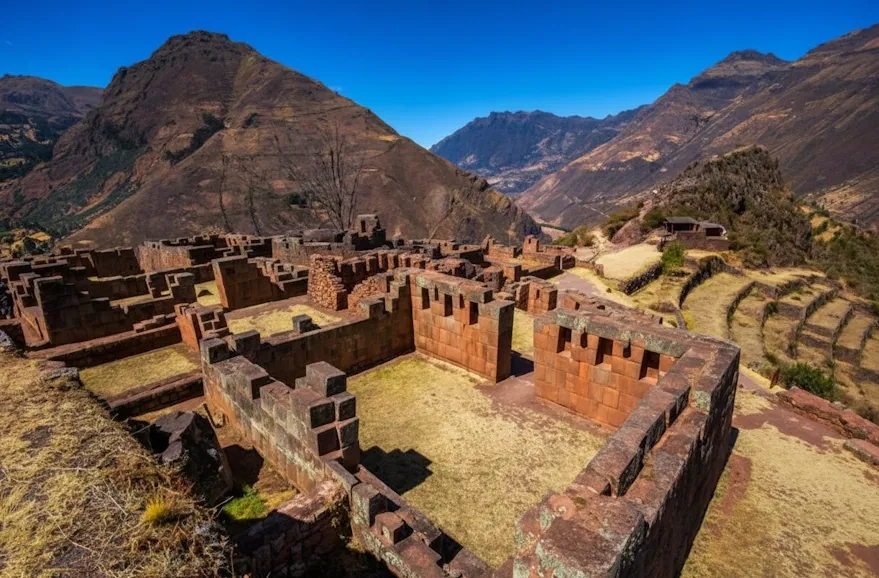
Ollantaytambo in the sacred valley of the incas
Ollantaytambo in the Sacred Valley of the Incas is one of the clearest examples of Inca urban planning. The town preserves original streets, water channels and stone walls that are still used by local residents, making it a unique living heritage site.
Beyond its historical value, Ollantaytambo was an important military and religious center. Its stone constructions, rising along the mountainside, show how the Incas adapted to the terrain and used every available space without disrupting the natural balance.
Flora and fauna of the sacred valley of the incas
The flora and fauna of the Sacred Valley of the Incas are diverse thanks to the variety of microclimates found throughout the region. Traditional crops such as corn, potatoes and quinoa grow in the fields, along with medicinal plants that are still part of daily life in local communities.
As for wildlife, Andean birds, vizcachas and llamas are commonly seen across the valley. These animals have been essential to Andean life since ancient times, playing an important role in food, traditions and spiritual practices.
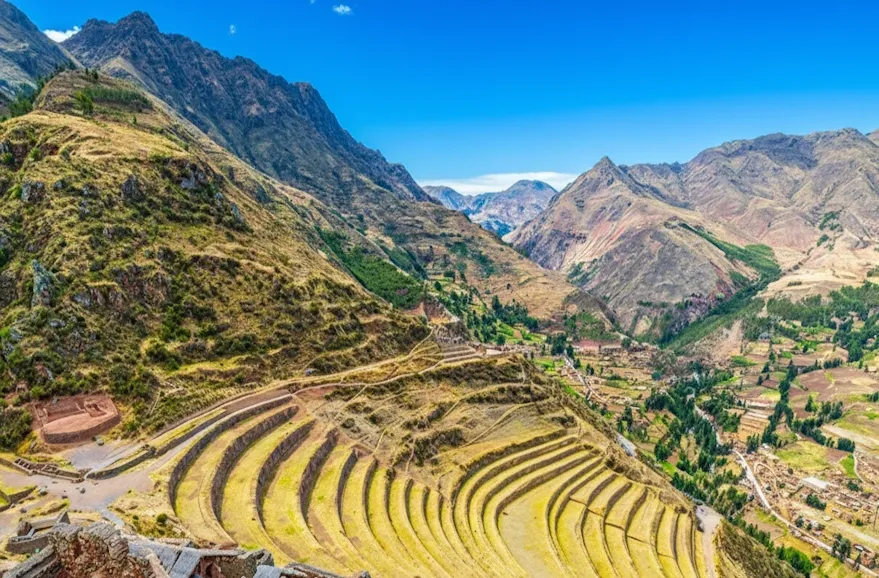
Essential elements of the sacred valley
Ingredients
Rivers that nourish the land and sustain agriculture
Mountains considered sacred in Andean culture
Agricultural terraces built with ancestral techniques
Traditional villages that preserve cultural identity
Inca trails connecting different areas of the valley
Conclusion
The Sacred Valley of the Incas is much more than a historical place. It is a living landscape where nature and culture come together naturally, showing how a civilization learned to live in balance with its surroundings. Every corner of the valley tells a story that invites observation, reflection and understanding.
Learning about this valley means getting closer to the roots of the Andean world and understanding why it continues to be so meaningful today. Its legacy lives on in its landscapes, its communities and the shared memory of those who call it home.
Frequently asked questions about the sacred valley of the incas
What is the Sacred Valley of the Incas?
The Sacred Valley of the Incas is a historical and cultural region located in Cusco, Peru, which played a central role in the agricultural and political development of the Inca Empire.
Why was the Sacred Valley important to the Incas?
The valley was important because of its fertile land, favorable climate and strategic location, which allowed food production and communication between different regions of the empire.
Which towns are part of the Sacred Valley of the Incas?
Some of the best known towns include Pisac, Urubamba and Ollantaytambo, each with strong historical and cultural significance.
What can be learned from the Sacred Valley of the Incas?
The Sacred Valley offers insight into Inca history, social organization and the spiritual relationship the Incas had with nature.